Thruway tolls rise again Jan. 1, and drivers without a New York E-ZPass pay the most
New York E-ZPass Thruway tolls rise 5% to 4.9 cents a mile on Jan. 1, while Tolls by Mail and out-of-state E-ZPass drivers move to 8.6 cents a mile.
By Greg Sciortino
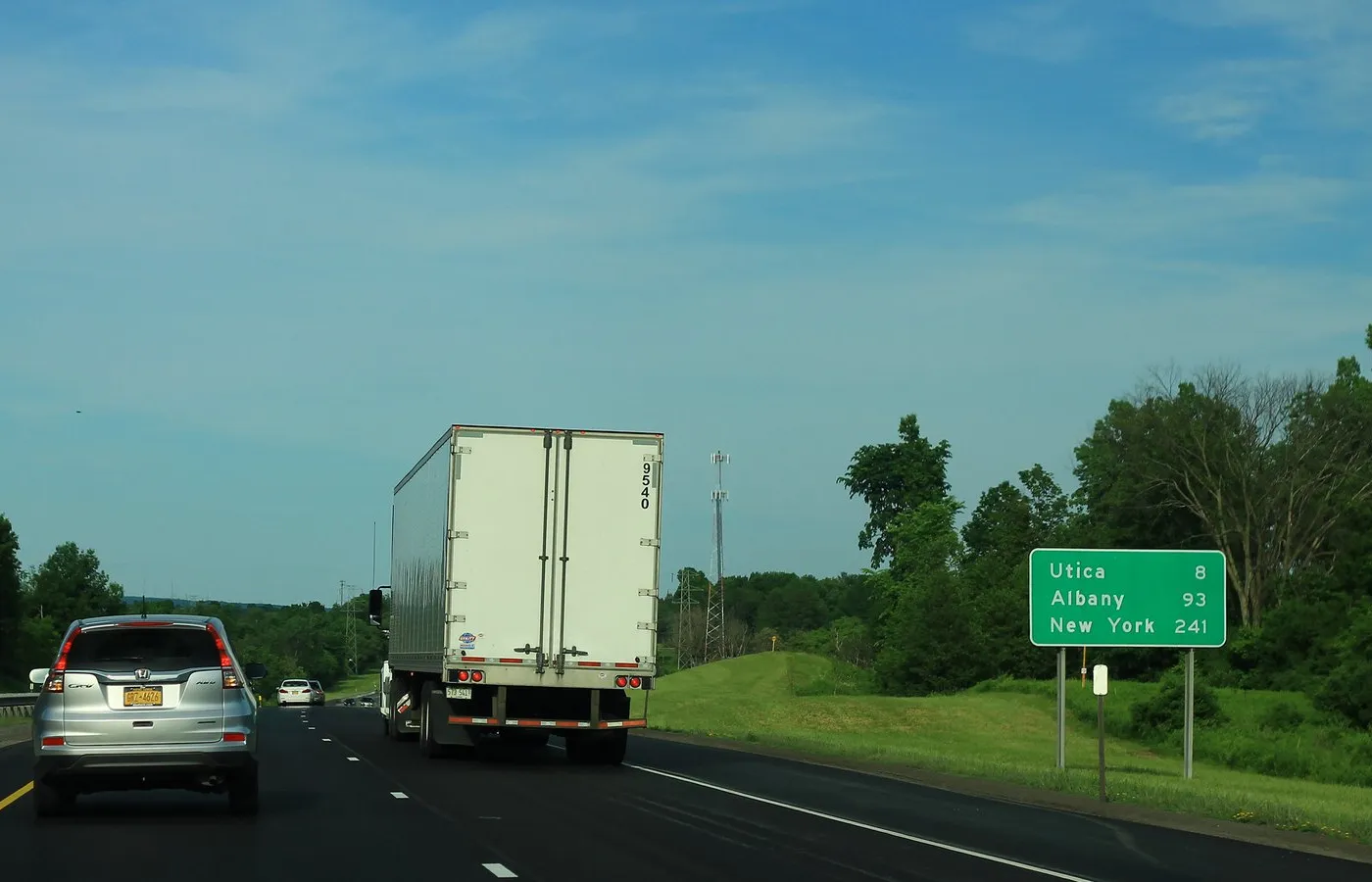

Clinton drivers who use the Thruway will pay more starting Jan. 1. That’s when the second step of a toll increase the Thruway Authority approved three years ago takes effect, and drivers without a New York E-ZPass will see the biggest change.
Base New York E-ZPass rates go up 5%, from 4.5 cents to 4.9 cents a mile for passenger cars, according to the Thruway Authority’s toll adjustment page. Drivers paying through Tolls by Mail or with an E-ZPass issued by another state will pay 8.6 cents a mile by 2027, up from the 5.8 cents and 5.1 cents a mile they paid before the increases began.
What it means for a local trip
For Clinton, the Thruway is the main road east to Albany and west to Syracuse, and the interchanges at Utica and Westmoreland are a short drive from the village. Actual tolls depend on where a driver gets on and off, and the authority’s toll calculator gives exact figures for each trip.
At the base per-mile rates, the math looks like this. Every 100 miles of Thruway driving costs a New York E-ZPass car about 40 cents more than it did in 2026, roughly $4.90 instead of $4.50. The same 100 miles costs a Tolls by Mail driver about $8.60, which is $3.70 more than a New York E-ZPass customer pays.
That gap is the point of the rate design. The authority has kept its lowest rates for drivers with a New York E-ZPass.
How the increase came about
The Thruway Authority’s board approved the two-step plan in September 2023, after a process that started in December 2022. It included five public hearings in 2023, four in person and one online, along with an environmental assessment.
The first step took effect Jan. 1, 2024. It was the first system-wide toll increase for New York E-ZPass customers since 2010. The second step is the one arriving in five weeks.
The authority says the Thruway is supported by user fees and gets no dedicated federal, state or local tax money. Its consultants found it needed more revenue to cover operations, debt payments and capital work over the forecast period. The authority says the plan still leaves it with some of the lowest toll rates in the country.
Drivers heading downstate will also see a change at the Gov. Mario M. Cuomo Bridge over the Hudson. Its base New York E-ZPass toll has gone up 50 cents a year since 2024, and the 2027 increase is the last scheduled one. The commuter discount plan continues there, and the discount for Westchester and Rockland residents rose from 17% to 20%.
Ways to pay less
For an occasional driver, the simplest savings is a New York E-ZPass account. At the 2027 rates, a car on Tolls by Mail pays about 75% more per mile than one with a New York tag.
Drivers who already have a tag from another state pay the higher non-New York rate on the Thruway. Anyone who drives the road often may come out ahead switching to a New York account.
Commercial vehicles have their own rate classes. Fleet operators can find them in the authority’s downloadable toll schedules.
The higher tolls arrive as local households sort out other 2027 costs, from the Kirkland town tax rate to the village’s downtown parking study. More is in our Oneida County and Finance sections.